Academic archive · University of Alabama, 2021–2025
The work before the work.
Fourteen documents from four years of finance coursework: equity research, stock pitches, industry studies and group presentations. They are here because they show the foundation the later systematic work sits on — a thesis argued from statements, a view defended in writing, a company valued before a single line of code.
Every file is the original student document, converted to PDF so it opens in a browser. Nothing has been retro-edited to look smarter than it was. Presentations that were group work name the team on the title slide; the solo pieces are labelled as such.
01 / Equity research & stock pitches
A thesis, a model, a price.
Five written pitches. Each one had to state what the market was missing and what would prove it wrong.
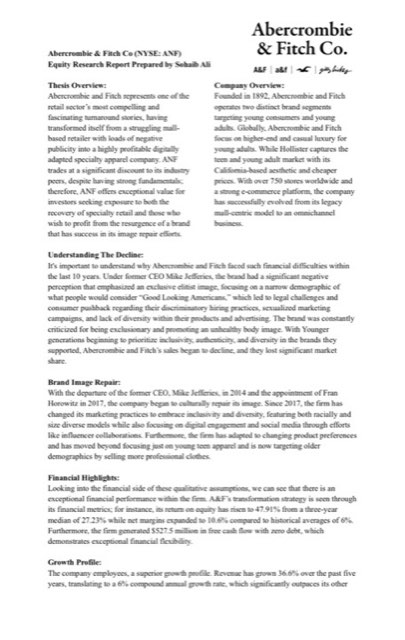
Abercrombie & Fitch (NYSE: ANF)
Turnaround thesis: a mall retailer rebuilt as a digital-first brand under Fran Horowitz. Argues the market still prices the old business — 47.9% ROE, 10.6% net margin and $527M of free cash flow with zero debt.
2 pagesPDF ↗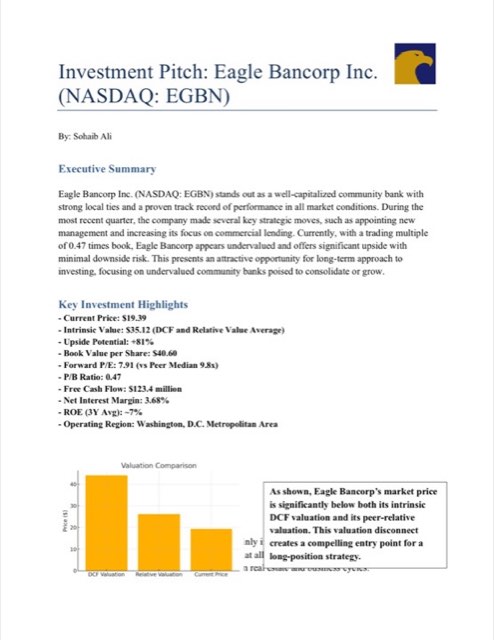
Eagle Bancorp (NASDAQ: EGBN)
Community-bank pitch built on capital adequacy and local deposit franchise, with the catalyst being new management and a deliberate pivot toward commercial lending.
3 pagesPDF ↗
Hewlett Packard Enterprise (NYSE: HPE)
The compressed format: business overview, the hybrid-IT and edge thesis, and a recommendation in one page. An exercise in cutting an argument to what actually carries weight.
1 pagePDF ↗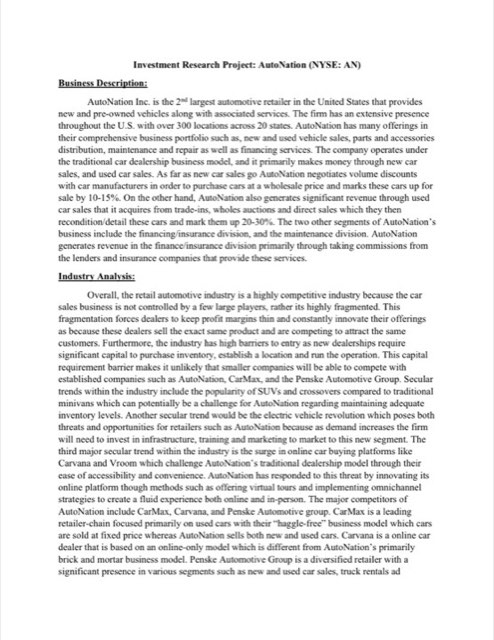
AutoNation (NYSE: AN)
Full research project on the second-largest US auto retailer: 300-plus stores across 20 states, the parts-and-service margin engine underneath new-vehicle cyclicality, and a valuation built from segment economics.
4 pagesPDF ↗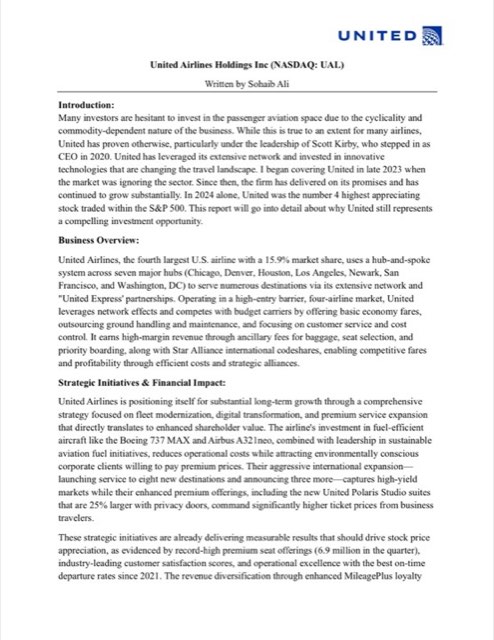
United Airlines (NASDAQ: UAL)
The contrarian case on airline cyclicality: Kirby-era network density, hub positioning and international mix as a durable cost and revenue advantage rather than a commodity bet.
3 pagesPDF ↗02 / Industry & field research
Zoom out, then go look.
Three pieces that start above the company level — an industry, a consumer, a screening process.
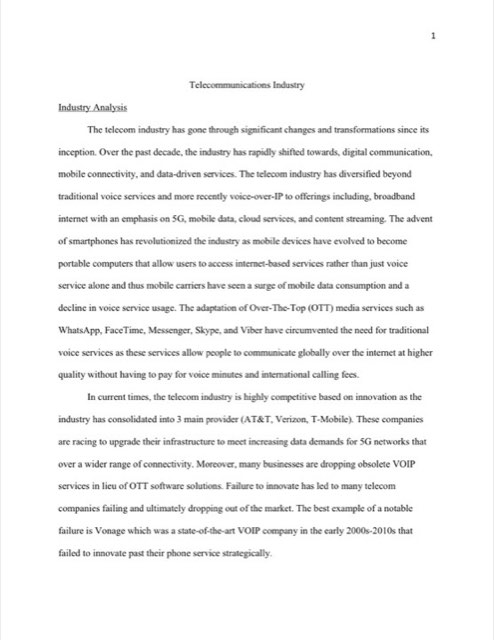
Telecommunications industry
Eight-page structural study of telecom: the shift from voice to data and broadband, competitive intensity, capital intensity and where the returns sit in the value chain.
8 pagesPDF ↗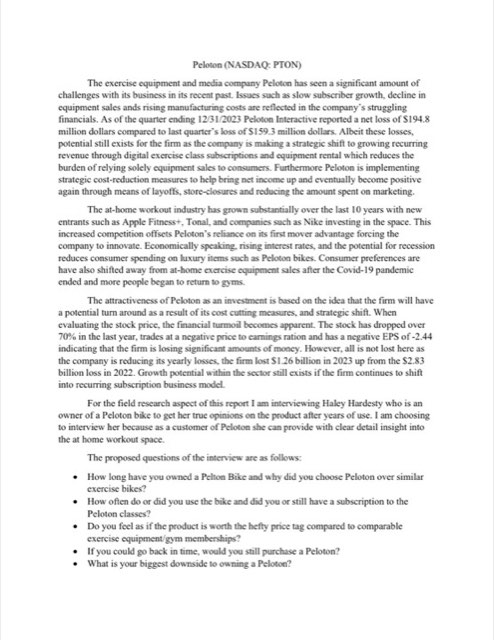
Peloton (NASDAQ: PTON)
Primary research rather than screen-scraping: subscriber behaviour and equipment demand examined against the reported numbers, including the $194.8M quarterly loss that followed the pandemic boom.
2 pagesPDF ↗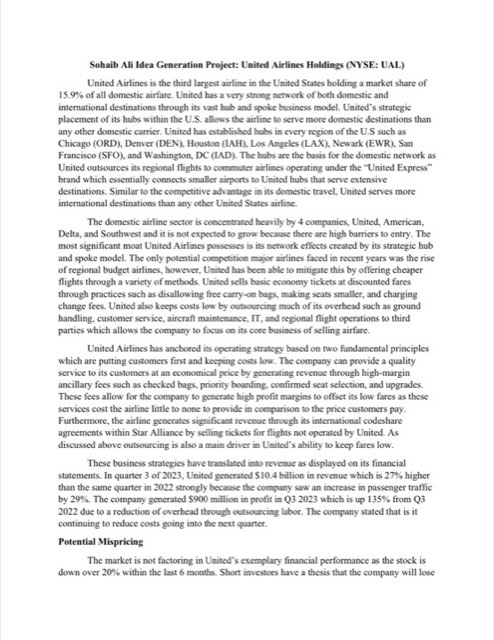
Idea generation: United Airlines
The stage before the pitch — how an idea gets selected at all. Domestic share of 15.9%, hub-and-spoke economics, and the screen that separated UAL from the rest of the sector.
2 pagesPDF ↗03 / Presentations & group projects
Argued in a room, not just on paper.
Six decks, converted from PowerPoint. Group projects name the team on the title slide.
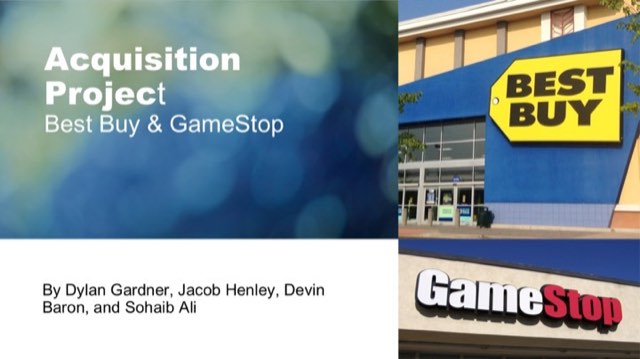
Best Buy & GameStop acquisition
Twenty-slide acquisition case: industry overview, strategic rationale, deal structure and an acquisition plan, built with three co-authors and defended in class.
20 slidesPDF ↗
Visa (NYSE: V)
Full company pitch with a BUY recommendation and a 2026 target of $378.03, a 37.4% expected return: network economics, take-rate durability and the multiples to support it.
19 slidesPDF ↗
Women’s apparel through the pandemic
How five apparel companies made financial decisions through COVID — liquidity, inventory and store strategy — set against a $187B US market growing at 2.5%.
9 slidesPDF ↗
Abercrombie & Fitch, presented
The same name as the written pitch, taken apart for a graduate audience: segment economics by geography, brand portfolio, and the case for the multiple re-rating.
9 slidesPDF ↗
Ali Capital Management Global
A fictional fund built from scratch: investment objective, value philosophy, sector focus and the high-conviction, high-risk mandate — a first attempt at designing a firm rather than a trade.
10 slidesPDF ↗
Value investing with long-term options
The idea that connects the two halves of my work: use long-dated calls to express a value thesis with defined capital at risk, and what that does to position sizing and payoff asymmetry.
11 slidesPDF ↗“The coursework taught me to form a view. The systematic work taught me to find out whether the view was worth holding.”
On the two halves of the archiveWant the current work? It is on the other page.
Strategy write-ups with walk-forward validation, four equity research reports on live businesses, and the ForgeAlpha architecture dossier.
Back to work